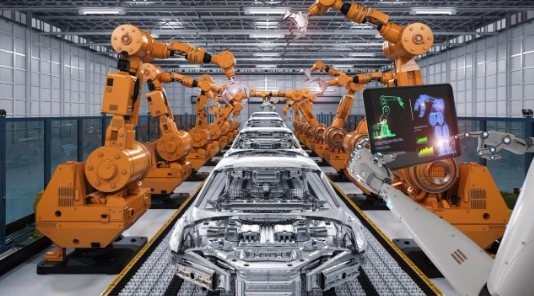
Robotics increasingly underpin modern industry by delivering consistent, high-precision performance for repetitive tasks. They reduce downtime and enable parallel workflows, boosting throughput while maintaining quality. A risk-based, traceable framework guides design, deployment, and operation, emphasizing hazard analysis and regulatory compliance. As routine work shifts toward problem-solving, the workforce undergoes governance-driven transformation through training and metrics. Data-driven, modular solutions support interoperability and scalability, yet practical evaluation remains essential to determine suitable implementations and outcomes.
How Robotics Boosts Productivity Across Industries
Robotics enhance productivity across industries by performing repetitive, precision-driven tasks with consistent quality and minimal downtime, thereby reducing cycle times and labor bottlenecks.
The analysis highlights scalable workflows through robotics integration and AI collaboration, enabling parallel processing, defect reduction, and throughput gains.
Adoption favors modular implementations, data-driven optimization, and interoperability, supporting autonomous decision-making while preserving human oversight and strategic flexibility across complex production ecosystems.
See also: turfofaso-turf
Ensuring Safety and Compliance With Robotic Systems
Ensuring safety and regulatory compliance in robotic systems requires a rigorous, risk-based framework that identifies hazards, evaluates exposure, and implements controls across design, deployment, and operation.
The approach emphasizes compliant engineering practices, traceable documentation, and ongoing safety auditing to verify conformance with standards.
From Repetitive Tasks to Strategic Work: Workforce Transformation With Robotics
What impact does the integration of robotics have on workforce composition, elevating repetitive task execution to strategic, value-adding work? The analysis identifies a shift from routine labor to problem-solving roles, enabled by automation ethics and structured human robot collaboration. Productivity gains accompany skills reallocation, requiring governance, training, and clear metrics to ensure strategic alignment and sustained operational resilience across industries.
Choosing Robotics Solutions: Evaluation Criteria for Modern Firms
Selecting robotics solutions requires a structured evaluation framework that translates strategic workforce implications into measurable criteria. Firms compare options via automation strategy and operational fit, aligning capabilities with demand curves and uptime targets. A formal cost benefit analysis quantifies capital, maintenance, and productivity gains, while risk, scalability, and interoperability inform long‑term viability. Decisions emphasize clarity, reproducibility, and disciplined alignment with corporate goals.
Frequently Asked Questions
How Do Robotics Impact Long-Term Maintenance Costs?
Robotics generally reduce long-term maintenance costs through predictive analytics and modular design. Maintenance cost forecasting enables early interventions, while preventive maintenance optimization minimizes unscheduled downtime and component wear, balancing upfront investment with cumulative savings and operational freedom.
What Is the ROI Timeline for Small Businesses?
“Time is money,” notes the analysis: the ROI timeline for small businesses varies by deployment but typically ranges from 12 to 36 months. A rigorous cost benefit comparison shows net gains when efficiency offsets upfront investments.
Can Robots Handle Complex Decision-Making Tasks?
Robots can perform complex decision making within defined parameters, though they rely on conditional reasoning and programmed constraints; their effectiveness depends on data quality, algorithm design, and the complexity of tasks, balancing autonomy with human oversight and safety.
How Do Robots Affect Job Satisfaction and Morale?
Robots influence job satisfaction by reallocating repetitive tasks, potentially increasing employee motivation. The morale impact depends on design and communication, as well as training; workforce engagement improves when humans collaborate with transparent automation goals and measurable outcomes.
What Are Data Privacy Concerns With Connected Robots?
Data privacy concerns with connected robots center on data collection, storage, and transfer. The scenario implies potential surveillance, unauthorized access, and bias. Analytical scrutiny reveals risk assessment, encryption, access controls, and transparent policies as essential mitigation strategies for data privacy.
Conclusion
Robotics orchestrate a quiet revolution, turning routine torque into strategic resonance. As systems interlock, productivity scales with disciplined precision, while safety and compliance become embedded norms rather than aspirations. The workforce shifts from repetitive labor to problem-solving artistry, guided by transparent governance and measurable metrics. In this modular mosaic, resilience emerges not from singular machines but from adaptable architectures. The deeper value lies in sustained interoperability, enabling enterprises to anticipate change and choreograph performance with unwavering clarity.